Meet me at Milan Design Week 2019
@ BASE MILANO / Space D
Via
Bergognone 34, 20144, Milan Italy
Supervised by Prof. Carola Zwick
Master Semester 1
Tools:
3D
printing, laser cutting, arduino, LED strips, stepper motor, NFC sticker, RFID reader
Teamwork:
Xinyue Yang, Antonia Nandori
Problems:
Coffee consumption on the go increasingly relies on self-service.
Starbucks-style chain outlets make us stand in line to order; our workplace cafeteria
requires us to operate an automated machine. While this optimizes the process for the
organisation who sell the coffee, for the consumer, it becomes ever more tiresome. We spend
longer queueing, are under pressure to speed up our order, and know very little about the
product they will receive. This amounts to a dissatisfactory user experience, one which
falls far short of traditional café service.

Queuing for a long time in public service

In front of a menu full of strange coffee vocabularies, user feels streesed to make a quick decision

The interaction is boring - pressing a button, and user knows little about what they will receive
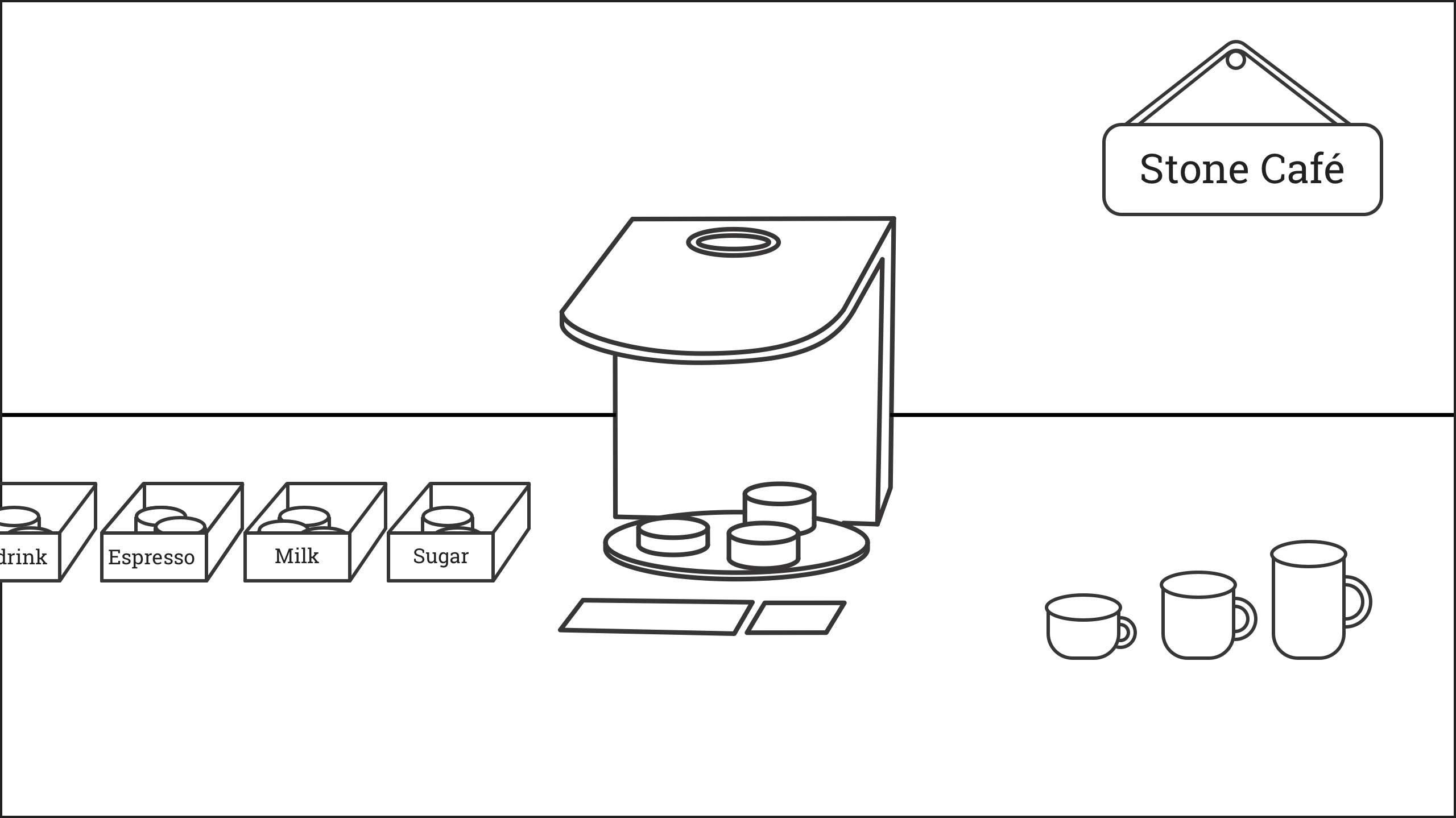
Background: Public Service / Semi Self Service
This modular system is considered to be scalable depending on diffenrent preference,
region and various coffee culture.







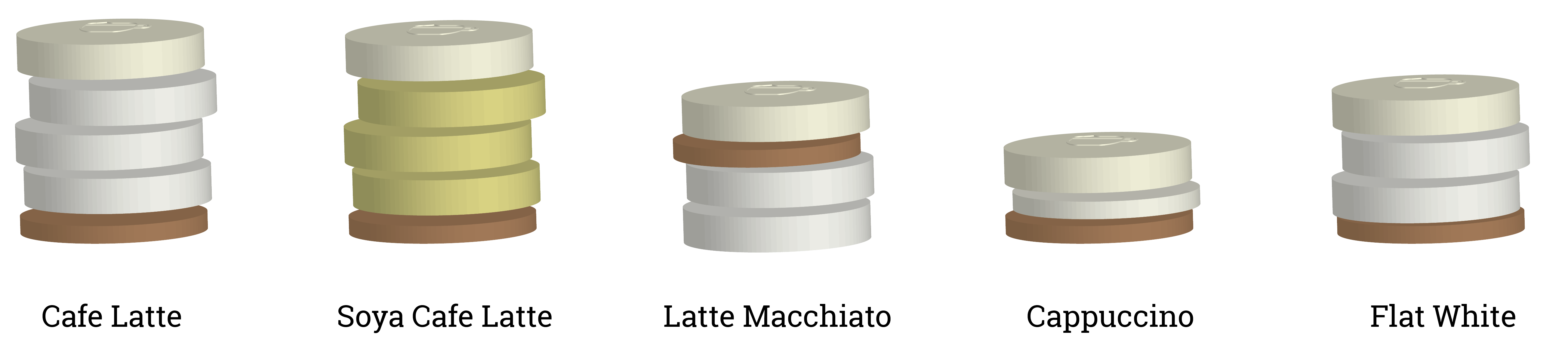
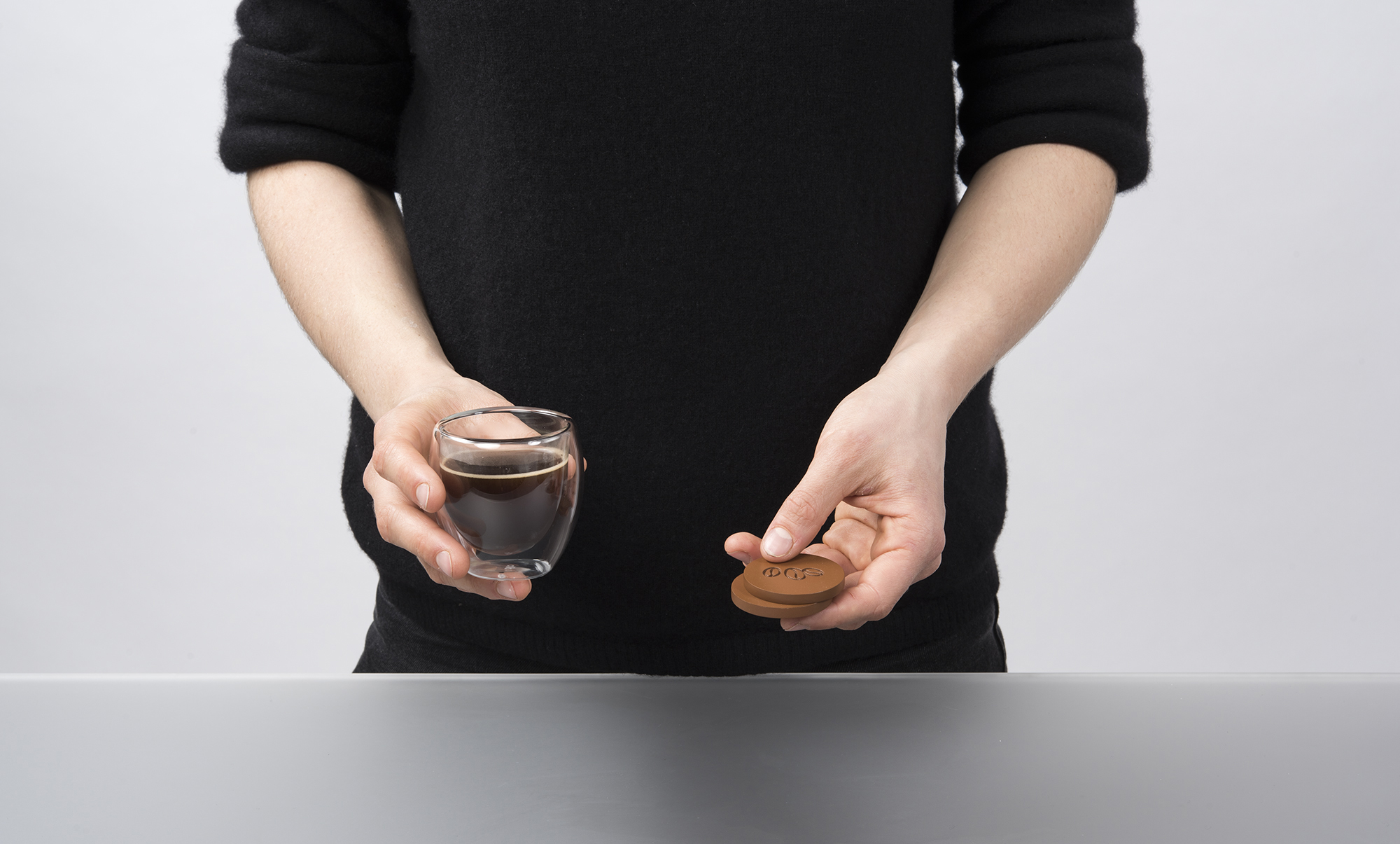
Each module represents an ingredient and has a bold-style graphic logo on
it. The sideview of the modules visually makes the ratio between different ingredients much
stronger. The color code serves as a supporting hint to help people recognize what module it
is. They have different heights of 3mm, 5mm and 9mm.

a playfull experience of composing a drink

visually corresponded layers, it brings more transparency and knowledge to your drink
The choosing process starts earlier as soon as people join the queue. With a playful
choosing experience, it makes waiting time seem shorter.
She chose 2x Milk and 1x espresso, the ratio is 2:1 (milk to espresso)
It might taste similar as cappuccino
mechanism inside of the machine

An embedded NFC sticker makes it recognizable
serial communication between arduino (nfc reader) and p5.js
The machine starts to recognize the cup as soon as you take it.
The breathing
LED light gives you a hint where to put your cup and modules. The biggest cup would be
suggested to place onto the lowerst platform while the smallest cup will be suggested to the
highest platform.
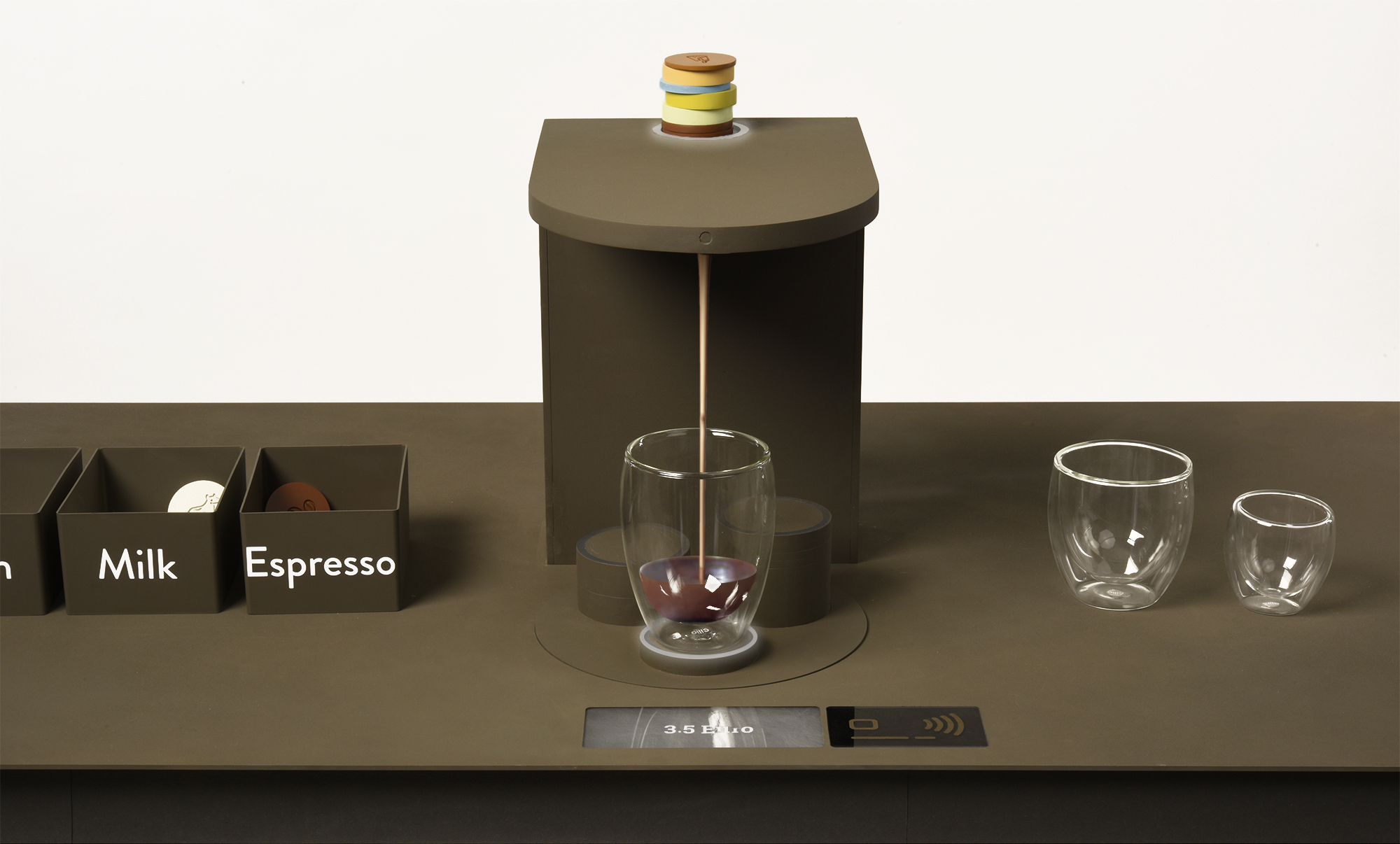
By placing the modules onto the surface, it can recognize the type
and amount of the modules. In the end it maps the ratio into cup’s volume.
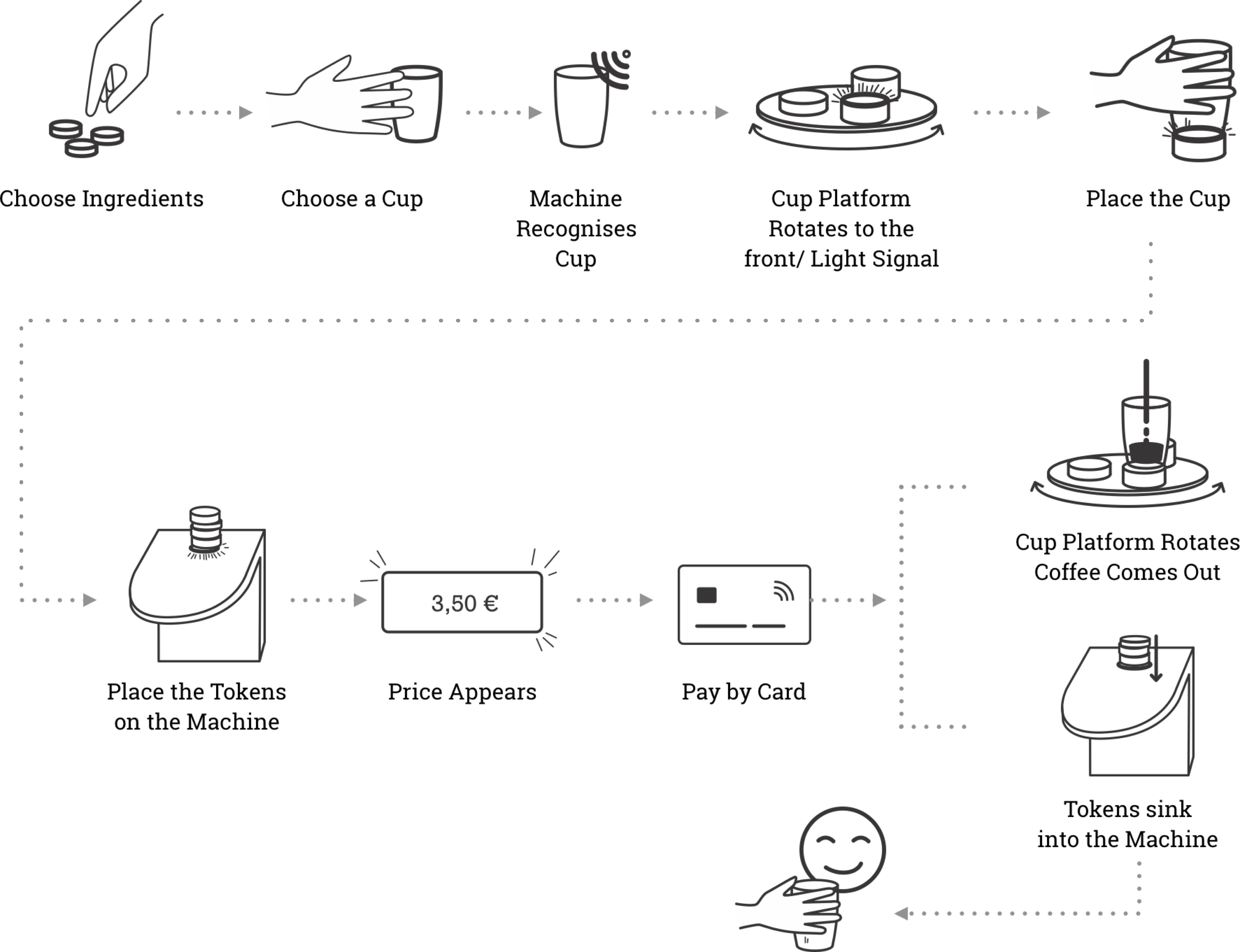
By taking the cup - Machine recognizes the cup and gives you light signal
By placing the tokens - Machine recognizes the tokens and calculates the price
Exhibition at Milan Design Week 2019
